Geopolitical Flashpoint: U.S. and China Clash Over AI Safety Paces Ahead of High-Stakes Summit

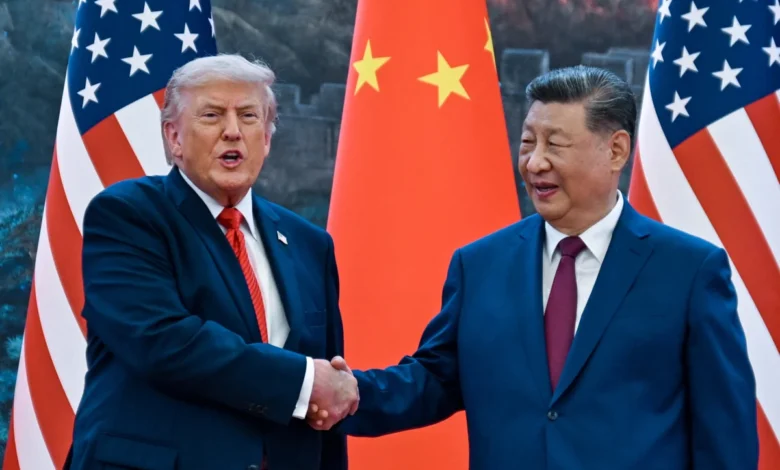
The global conversation surrounding artificial intelligence safety has escalated into a high-stakes diplomatic confrontation, triggered by viral warnings from Silicon Valley researchers regarding the existential risks of frontier technologies. As the artificial intelligence sector rapidly expands, prominent figures within the U.S. tech ecosystem are intensifying their appeals for a bilateral moratorium or a formalized "speed limit" on advanced model training, coordinated directly with Beijing. However, these proposals have met swift resistance from the highest levels of government in both Washington and Beijing. With U.S. President Donald Trump and Chinese President Xi Jinping scheduled to meet for a critical bilateral summit on September 24, the widening chasm between American "AI doomerism" and Chinese strategic ambitions threatens to complicate any meaningful framework for global governance or non-proliferation agreements.
The current diplomatic impasse roots itself in a rapidly evolving technological landscape defined by fierce competition and fundamentally divergent philosophies regarding software architecture, state control, and geopolitical dominance. While American industry leaders argue that unprecedented computing scales pose apocalyptic risks to humanity, their Chinese counterparts view such rhetoric as a transparent protectionist maneuver designed to freeze a narrowing technological gap and preserve American hegemony.
Chronology of Escalation: From Silicon Valley Warnings to Diplomatic Rejections
The latest crisis of confidence within the American tech sector began in early September 2026, when an X post by a former Anthropic researcher went viral, claiming that unconstrained frontier models could mathematically reach capabilities capable of human extinction before the decade’s end. This sentiment was formally codified on September 12, when Anthropic CEO Dario Amodei published an extensive policy framework calling for the United States and China to establish a mutual speed limit on artificial intelligence development, drawing explicit parallels to the nuclear arms control treaties of the Cold War.
Simultaneously, OpenAI CEO Sam Altman echoed the need for coordinated oversight, going so far as to suggest in a media interview that Presidents Trump and Xi could merit a Nobel Peace Prize if they successfully negotiated a binding bilateral safety treaty. Altman’s ego-driven appeal, however, failed to sway either administration.
On September 14, President Trump took to Truth Social to decisively dismiss the concept of artificial intelligence slowdowns or federal guardrails. In a characteristic post, Trump asserted that the only guardrail required by the United States is a decisive, high-IQ president, later underscoring his administration’s zero-sum philosophy with the maxim, "Whoever wins AI, wins!" That same day, Trump reinforced his disdain for industry-wide panic during an impromptu phone call placed on speaker by Nvidia CEO Jensen Huang at a live industry event, where Trump explicitly declared that the concerns raised by executives like Amodei would not impede national progress and dismissed data-center backlashes and extinction fears as a hoax.
Concurrently, Beijing offered a frosty reception to the American appeals. During a regular press briefing on September 14, Chinese Foreign Ministry Spokesperson Guo Jiakun characterized the discourse emanating from U.S. labs as fear-mongering designed to subvert sound global governance frameworks. This official stance was mirrored by Chinese AI engineers and industry observers; notably, a widely circulated post by DeepSeek engineer Shengyu Liu likened Anthropic’s pursuit of exclusive frontier capabilities to Nazi Germany acquiring atomic technology ahead of the Allies, highlighting the profound deficit of trust between Western private laboratories and Eastern open-weight developers.
Divergent Philosophies: Closed Models versus Open-Weight Democratization
The tactical disagreement between the United States and China extends far beyond political rhetoric into the fundamental engineering and economic models underpinning modern artificial intelligence development. For years, the prevailing consensus within Silicon Valley—championed by firms such as OpenAI and Anthropic—has relied on closed, proprietary models trained on massive compute clusters. These companies argue that maintaining tight control over frontier model weights is a vital national security imperative that prevents malicious non-state actors, rogue nations, or autonomous systems from misusing advanced code.
Conversely, the Chinese artificial intelligence ecosystem has heavily prioritized the democratization of technology through cost-effective, open-weight models. Pioneered by firms like DeepSeek, this approach makes high-performance capabilities accessible to a broad developer base without prohibitive licensing costs. Critics within China argue that Western calls for safety protocols and centralized pacing are merely self-serving strategies intended to erect artificial barriers to entry, thereby protecting a vanishing American market advantage as Chinese domestic engineering rapidly closes the performance gap.
Furthermore, domestic priorities within China diverge sharply from the existential risk narratives dominating Western headlines. According to George Chen, partner and chair of the digital practice at The Asia Group, the Chinese public views the technology through an optimistic lens of national rejuvenation and practical utility. Younger generations, influenced by narratives of national ascent, largely regard artificial intelligence as an instrument for economic enhancement and quality-of-life improvements rather than an existential threat. Average citizens overwhelmingly place the burden of safety and risk mitigation on state regulatory bodies rather than private corporate boards.
Institutional Perspectives and the Threat Matrix
Despite the general public’s skepticism toward Western doomerism, institutional and security apparatuses within China maintain a rigorous, sophisticated focus on technological risks. Analysts note that behind closed doors, elite Chinese AI safety researchers are deeply preoccupied with concrete, near-term vulnerabilities, including sophisticated cyberattacks, automated bioweapon generation, and the potential loss of centralized institutional control over decentralized agentic systems.
This internal concern is matched by political imperatives. Chen Yixin, the head of China’s Ministry of State Security, recently issued explicit warnings regarding the national security threats posed by unvetted technological developments, emphasizing that unregulated systems could challenge the ruling Chinese Communist Party’s monopoly on social and political control. Consequently, Beijing is pursuing an independent regulatory pathway that rejects asymmetrical American oversight while simultaneously strengthening internal compliance mandates.
Policy experts suggest that while a comprehensive slowdown or mutual moratorium is virtually off the table, the upcoming September 24 summit between Trump and Xi may still yield targeted, transactional agreements. According to Paul Triolo, global technology policy lead at advisory firm DGA, both superpowers share mutual incentives to explore baseline guardrails that prevent catastrophic non-state actor events. Potential areas of pragmatic cooperation could include mutual non-weaponization pledges, foundational safety evaluation standards for biological dual-use capabilities, and protocols to protect global financial infrastructure from automated systemic disruption.
Implications for Global Technology Governance
The failure of Silicon Valley’s diplomatic appeals highlights a profound structural limitation in contemporary technology governance: the inability of private-sector entities to dictate geopolitical strategy to sovereign nation-states locked in a zero-sum technological race. As long as artificial intelligence remains the foundational pillar of future economic power and military capability, neither Washington nor Beijing is willing to unilaterally cede momentum.
As the September 24 presidential summit approaches, the global community faces a bifurcated technological future. The absence of a synchronized U.S.-China safety accord increases the likelihood of an unregulated escalation spiral, wherein competitive pressures repeatedly override long-term risk mitigation. Whether the two superpowers can successfully carve out narrow, pragmatic treaties to govern non-proliferation and critical infrastructure defense remains the defining geopolitical question of the decade, with the stability of the global digital economy hanging in the balance.